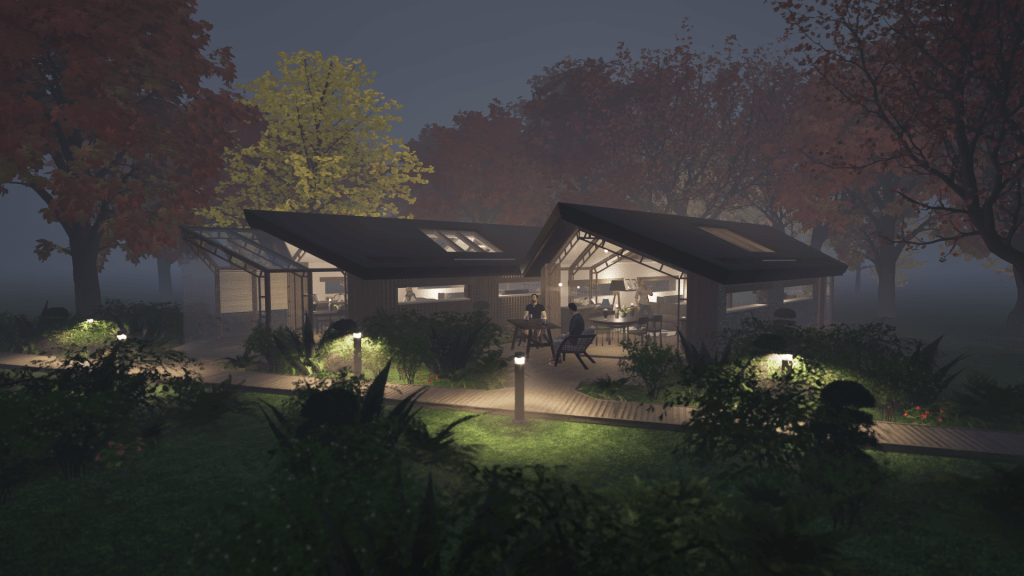
The Keystones are centred around one purpose: Permanence. Designed as housing for military families, this cohousing scheme gives families the rigidity that families can often lack.
The majority of families of serving personnel every one to three years are given ‘postings’, orders to move to a military base, either behind the wire (on base) or outside. It’s no secret the dissatisfaction that military families often feel when presented with two or three outdated houses to choose from, which are often time falling apart in one way or another.
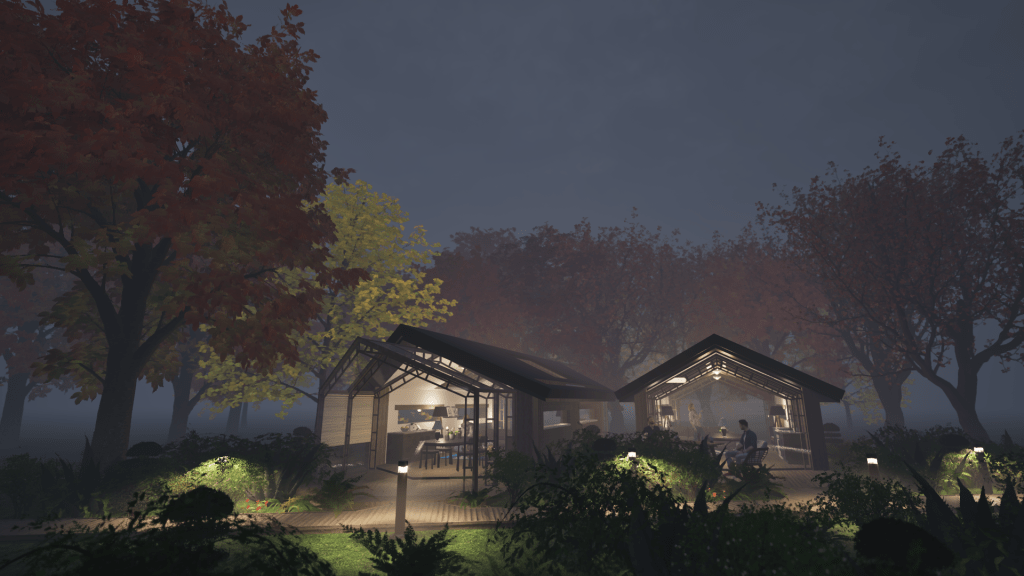
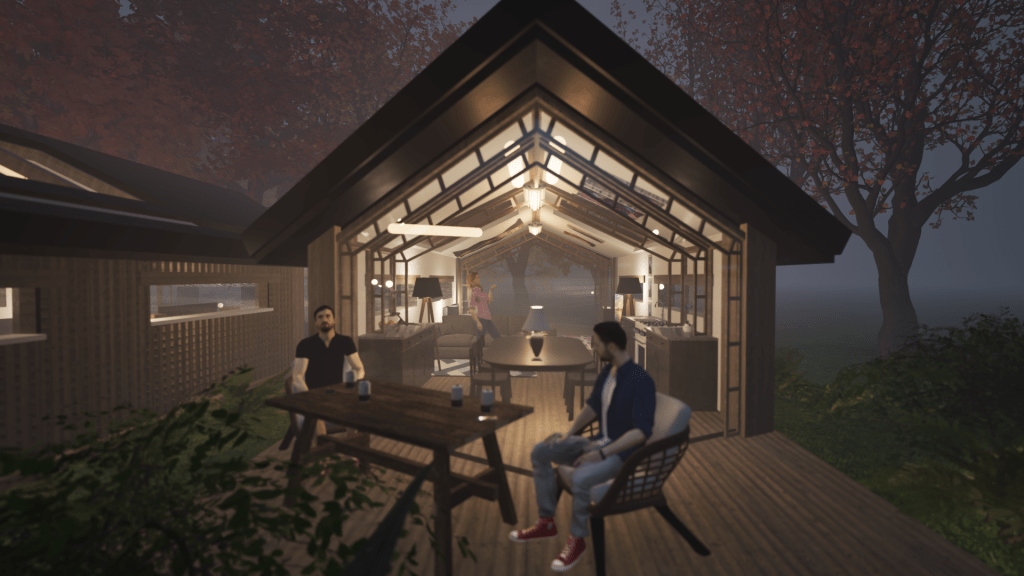
These Keystones would give military families an adaptable, permanent place to stay, where the children of families can remain in the same school, can maintain friend groups and can build relationships without the handicap of needing to restart every one to three years.
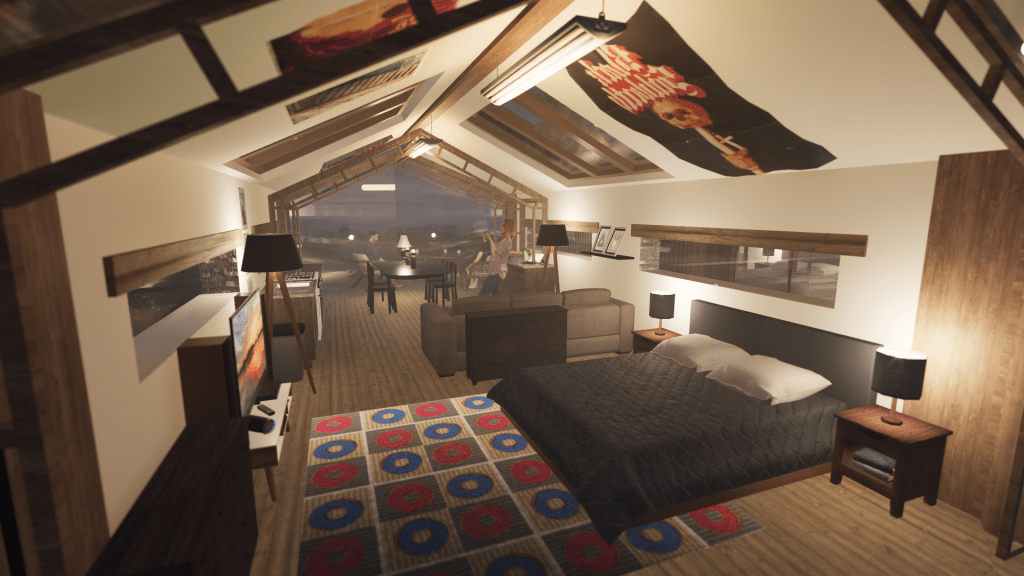
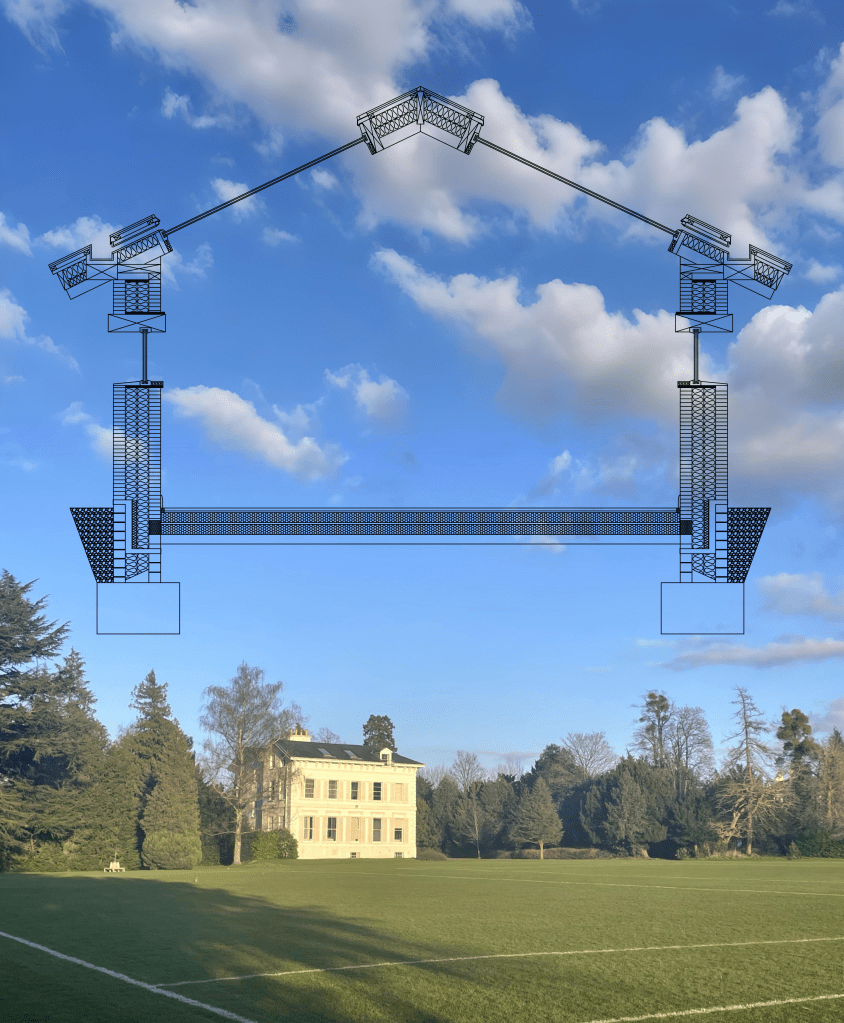
Each house would act as a ‘Keystone’ in each member of the family’s life, holding up the metaphorical arch that is the family, community and the welfare of them all. Without the keystone, an arch would collapse, illustrating the integral role that housing plays in the lives of military personnel.
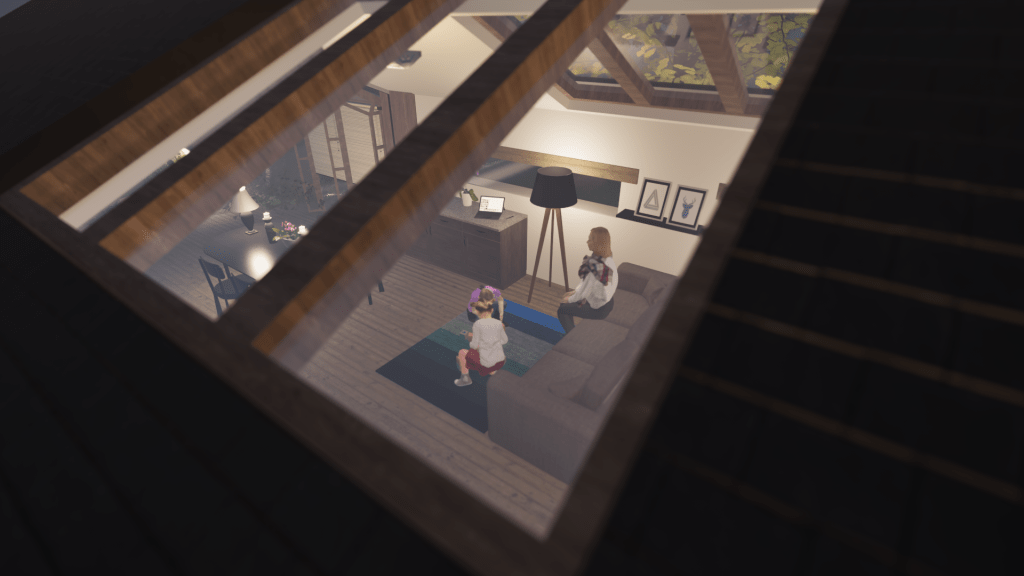
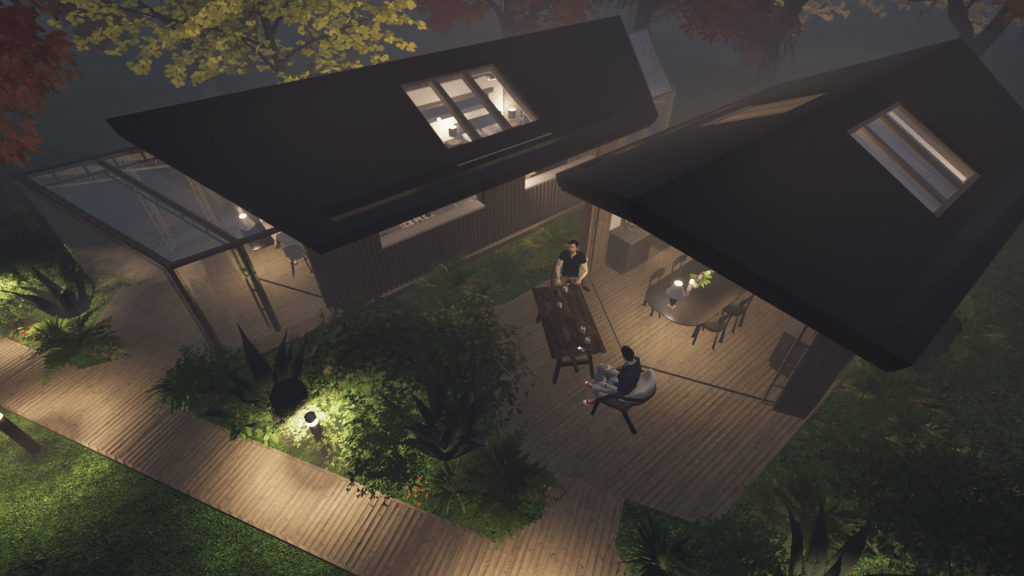
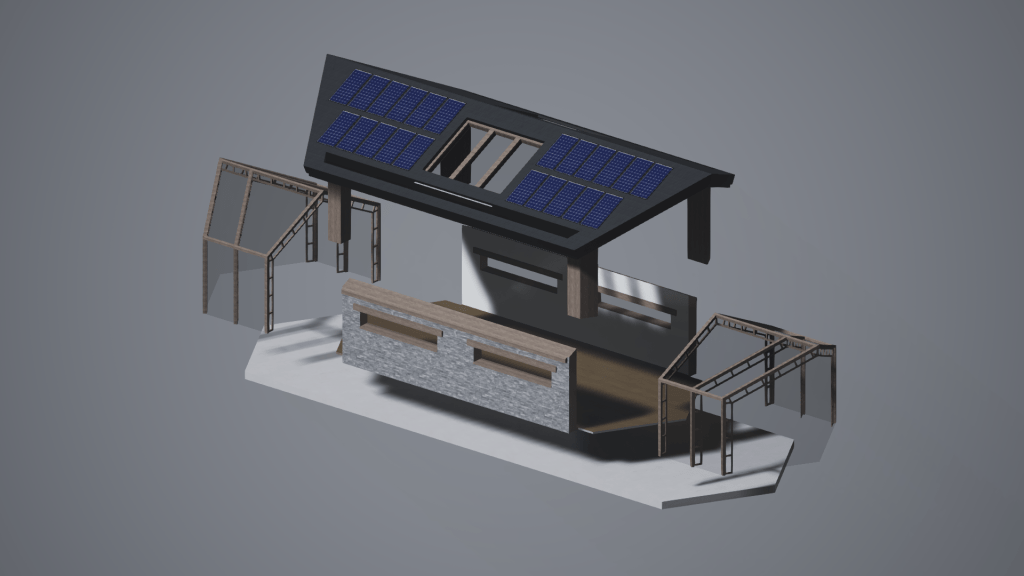
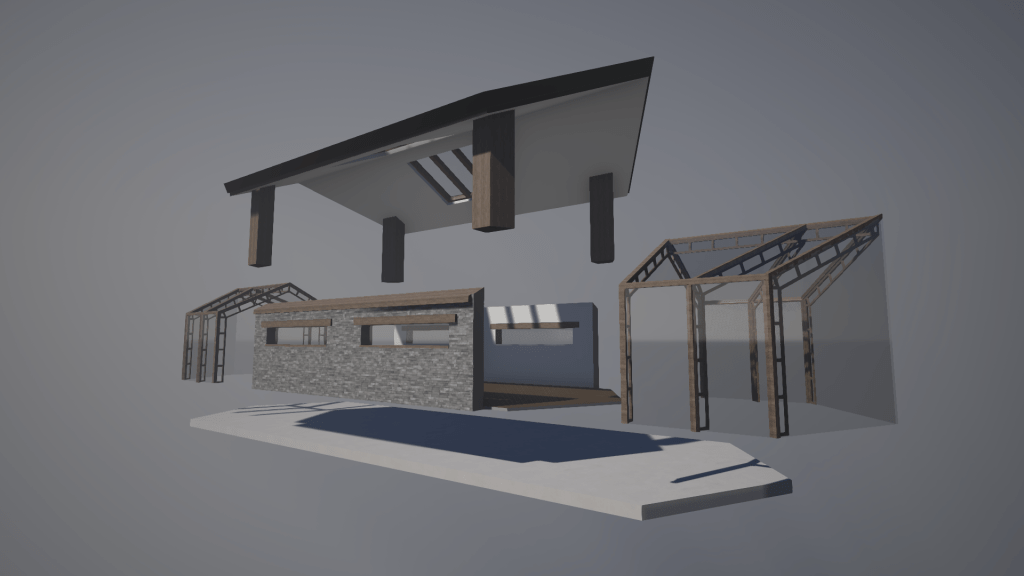
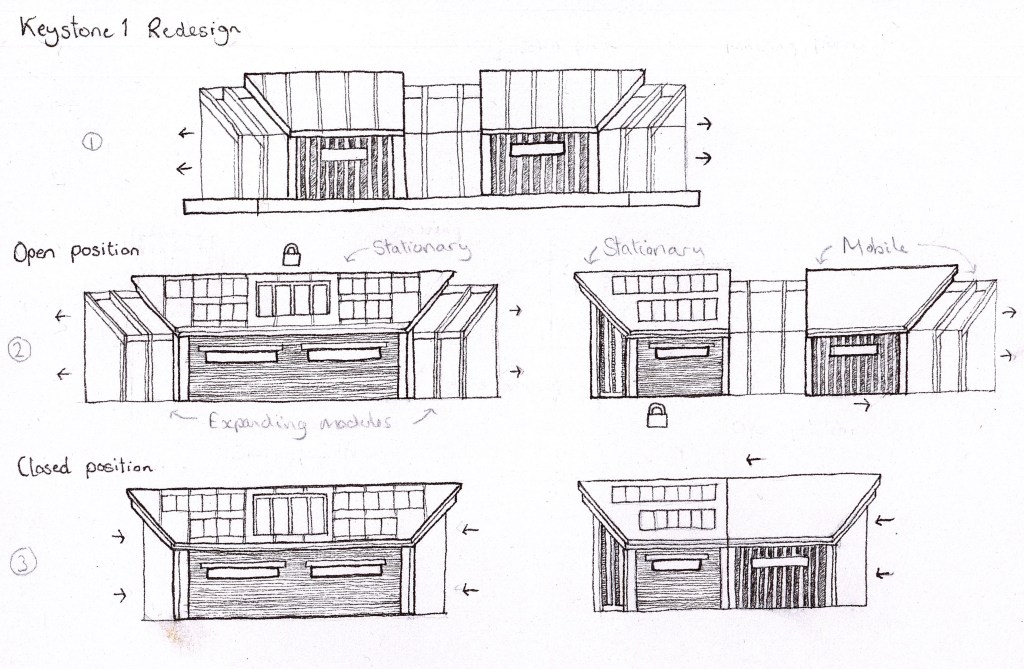
With each Keystone possessing the ability to increase in volume by up to 44%, (74 m³), each is adaptable to changing circumstances. For instance, if the serving personnel are returning from deployment abroad, the modules and be moved to increase the interior space.
Or if a family intends to host a get together among others in the community, they can increase the volume to fit all who wish to join.
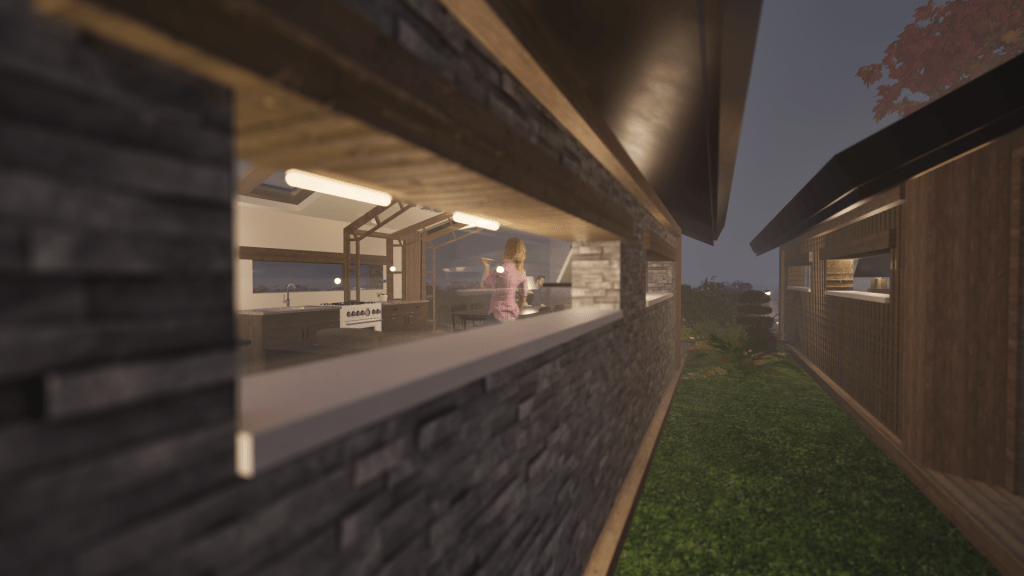
It is very common for strong bonds to form, found only between those living behind the wire in military communities, who face similar challenging circumstances as their neighbours day to day. This project aims to keep this strength in a permanent community.
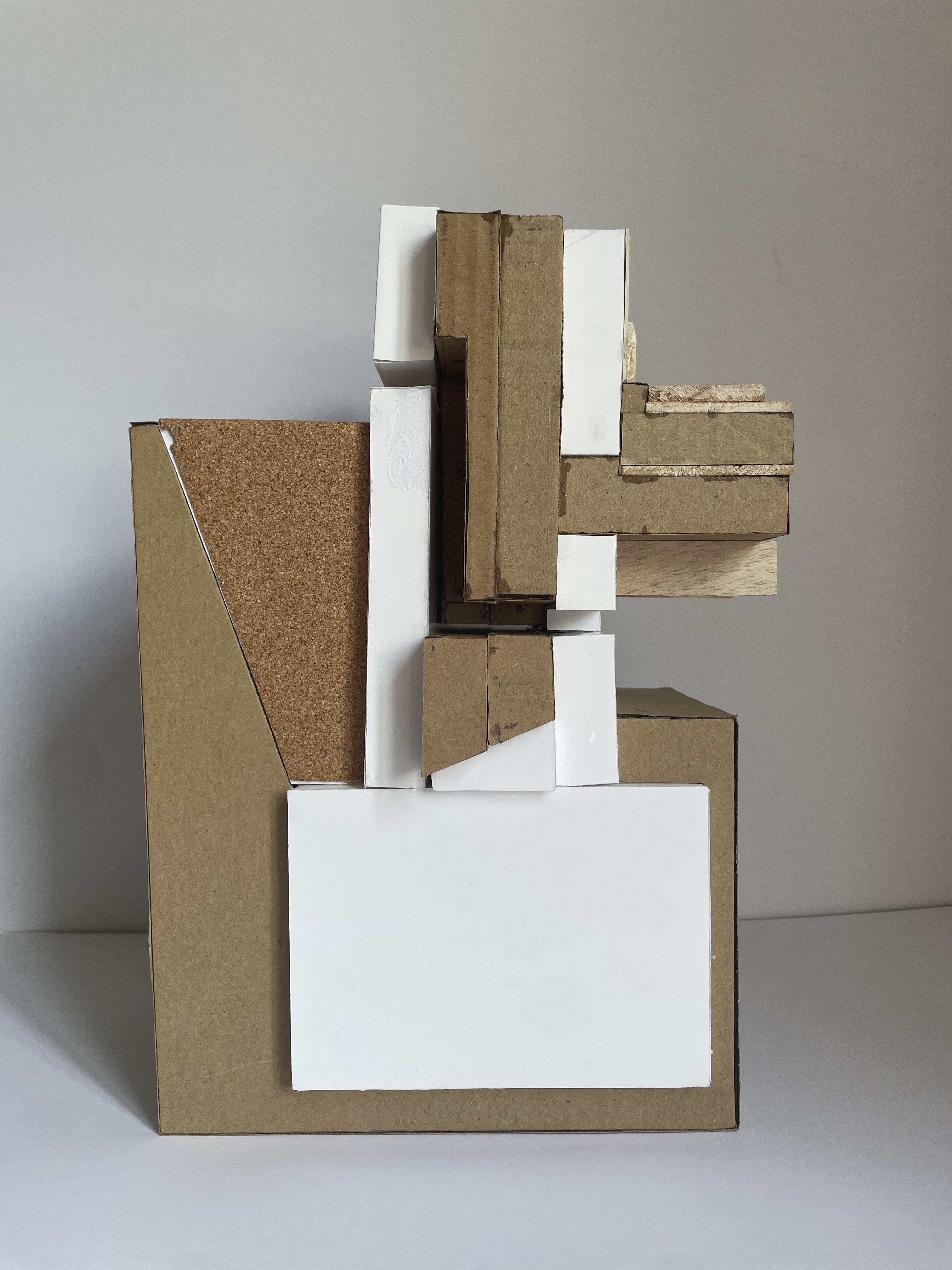
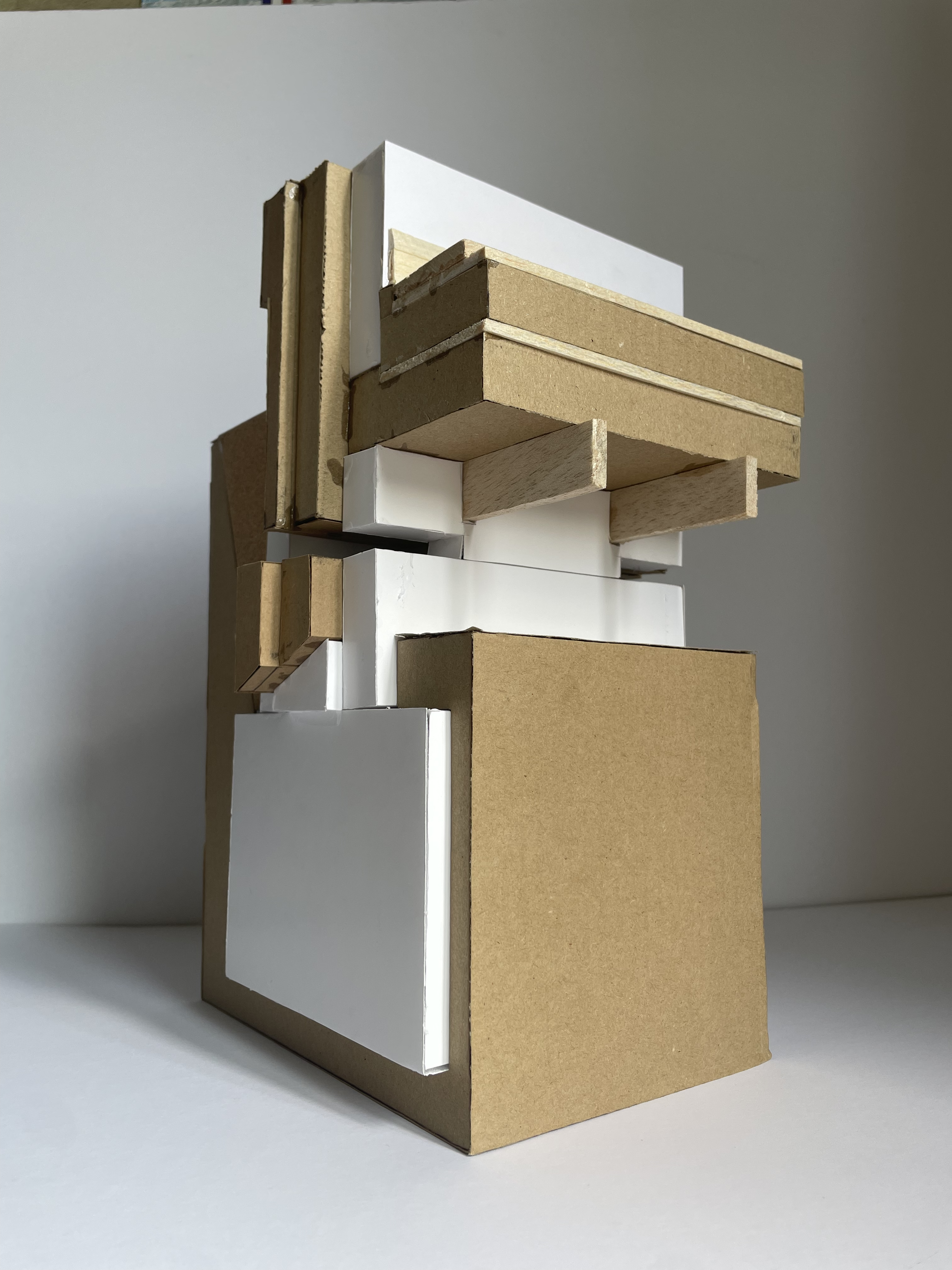
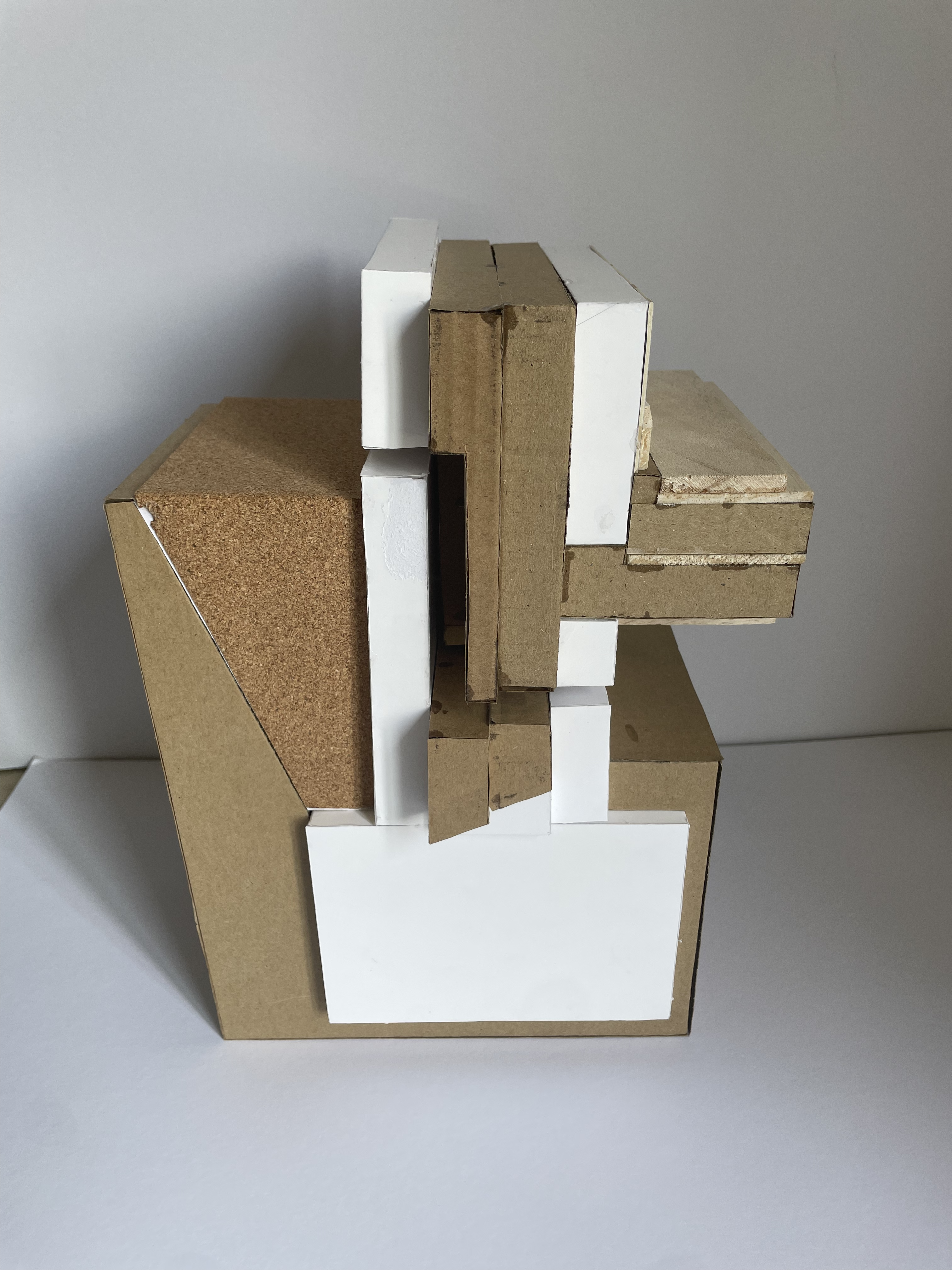
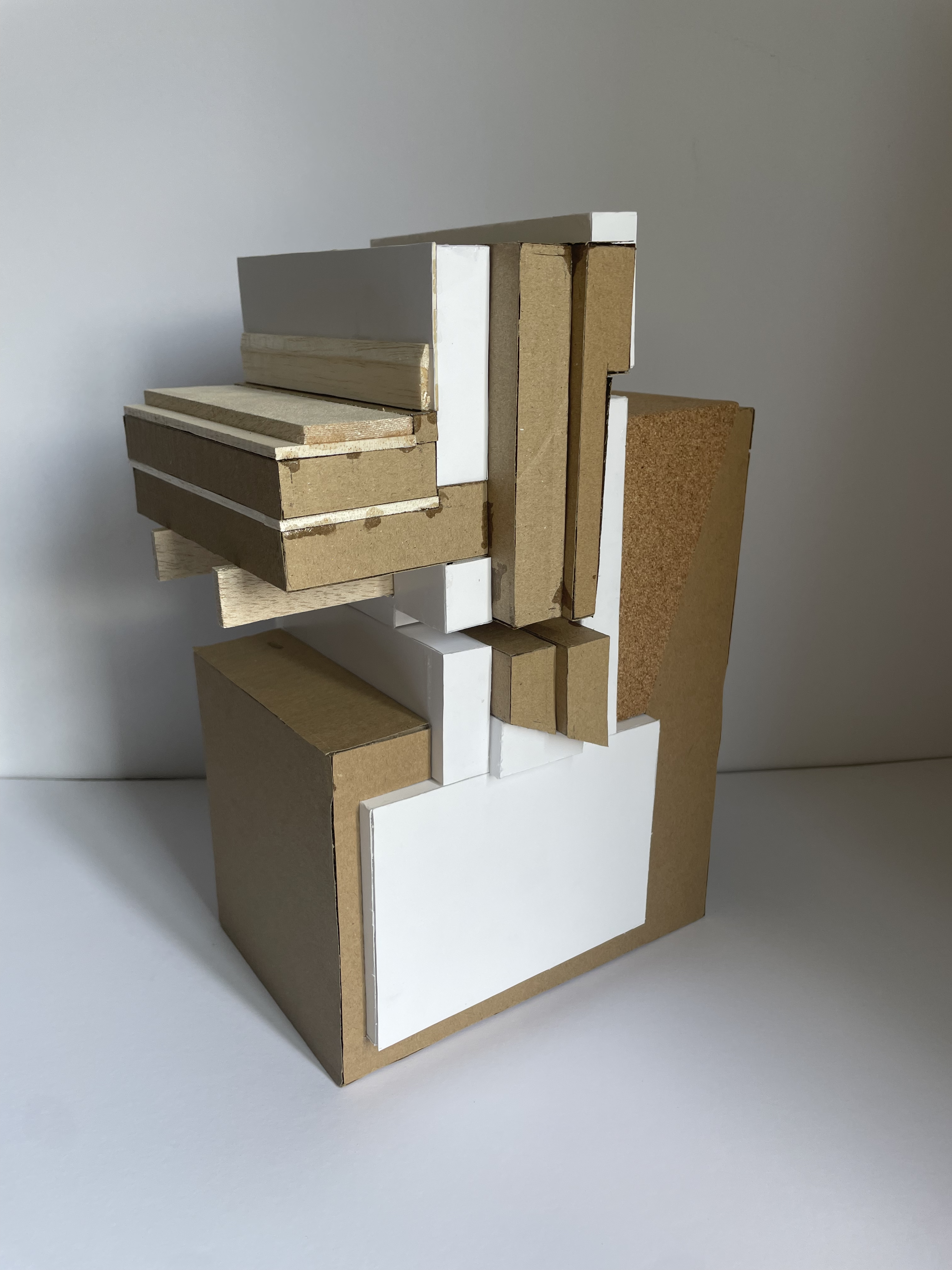
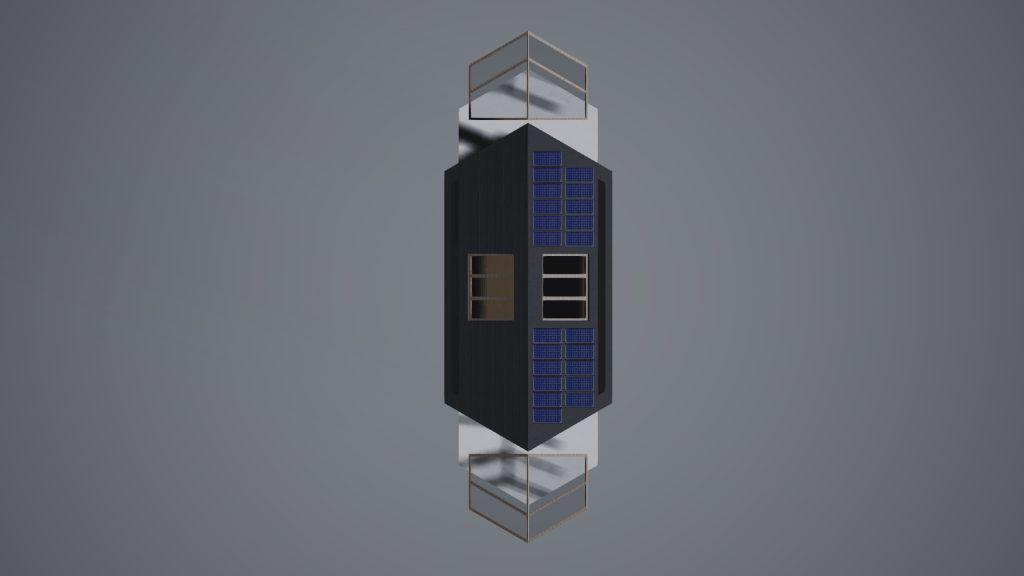
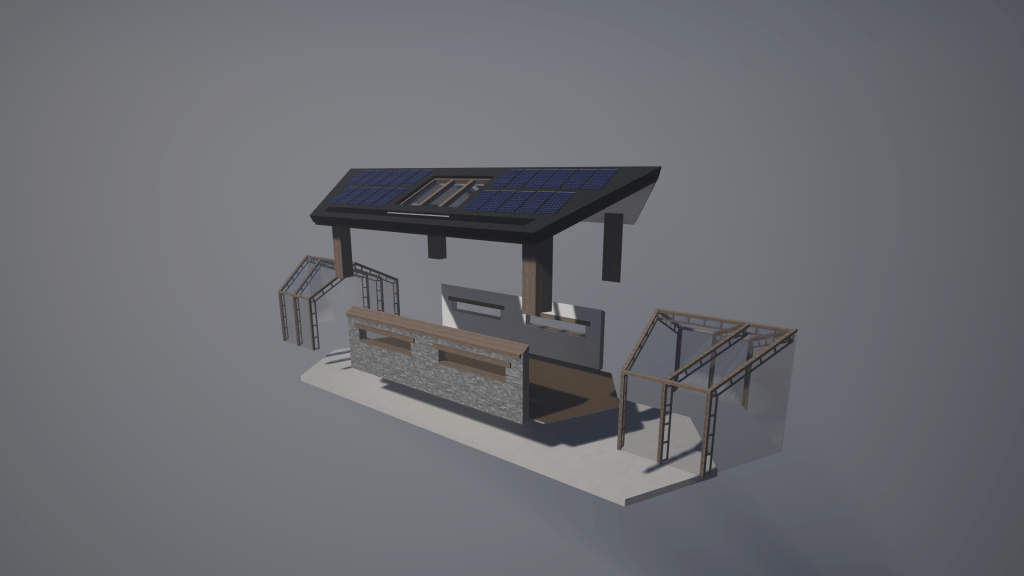
Initial Designs
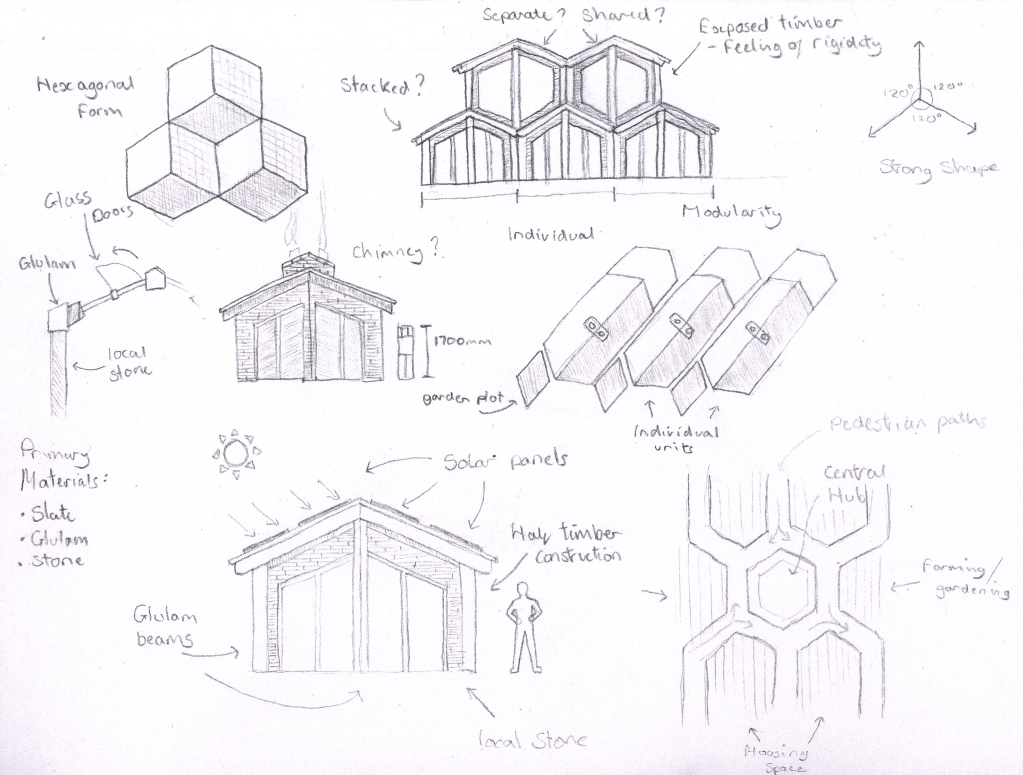
Designing began from the basis that the hexagon is the strongest shape, and would in this context provide a rigid structure for the family to build upon.
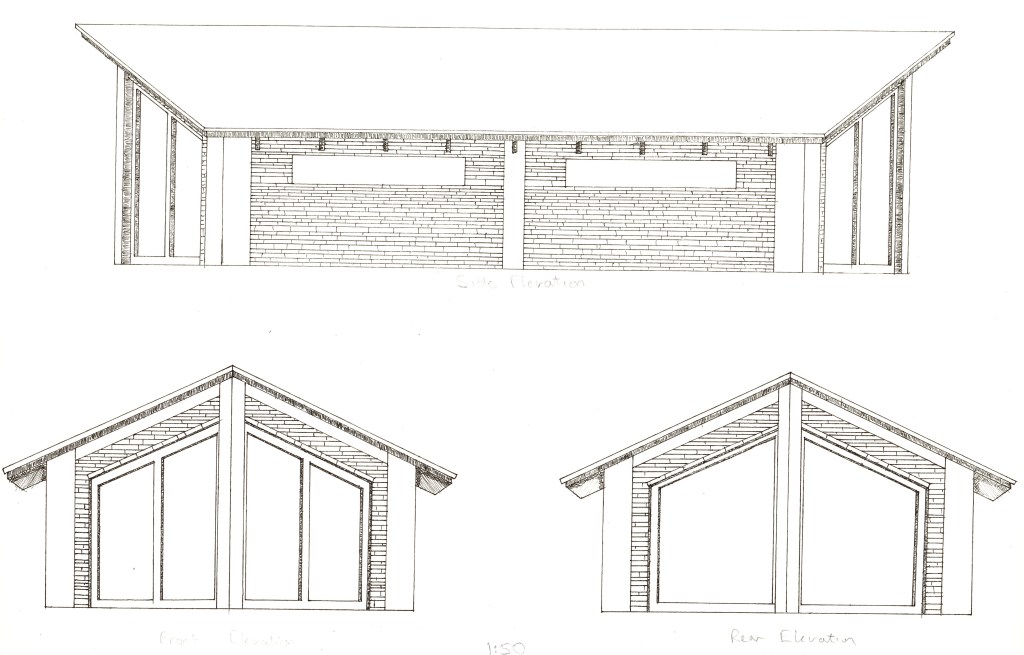
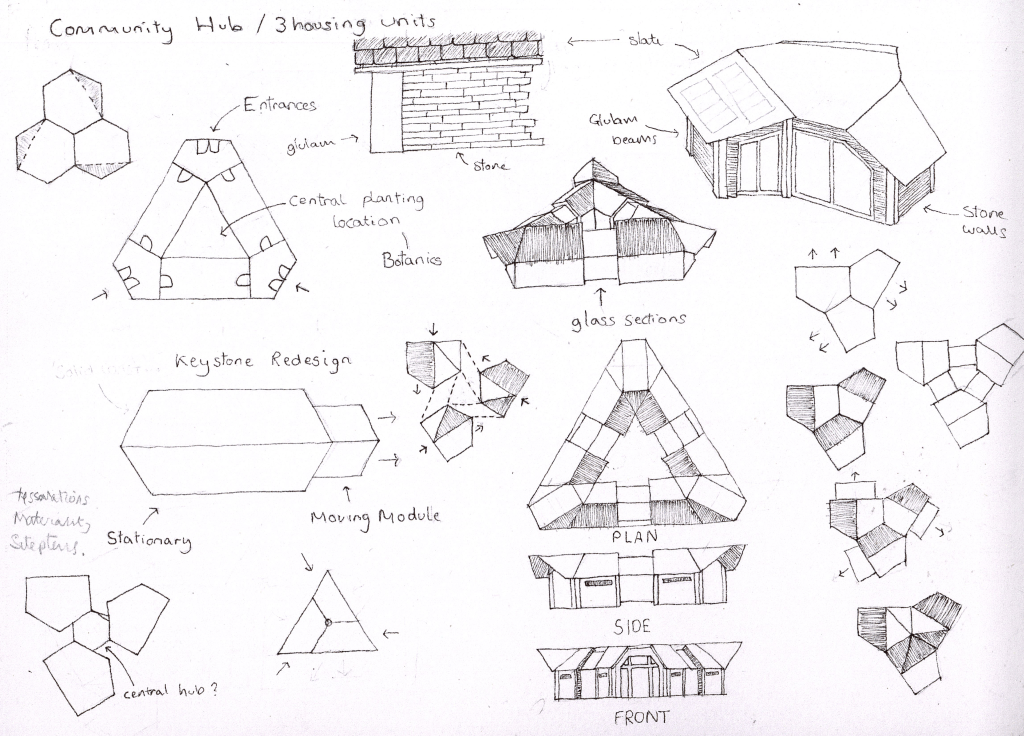
The main Keystone was redesigned to better meet a military family’s needs, giving them large amounts of adaptability. this is where the extending module was introduced.
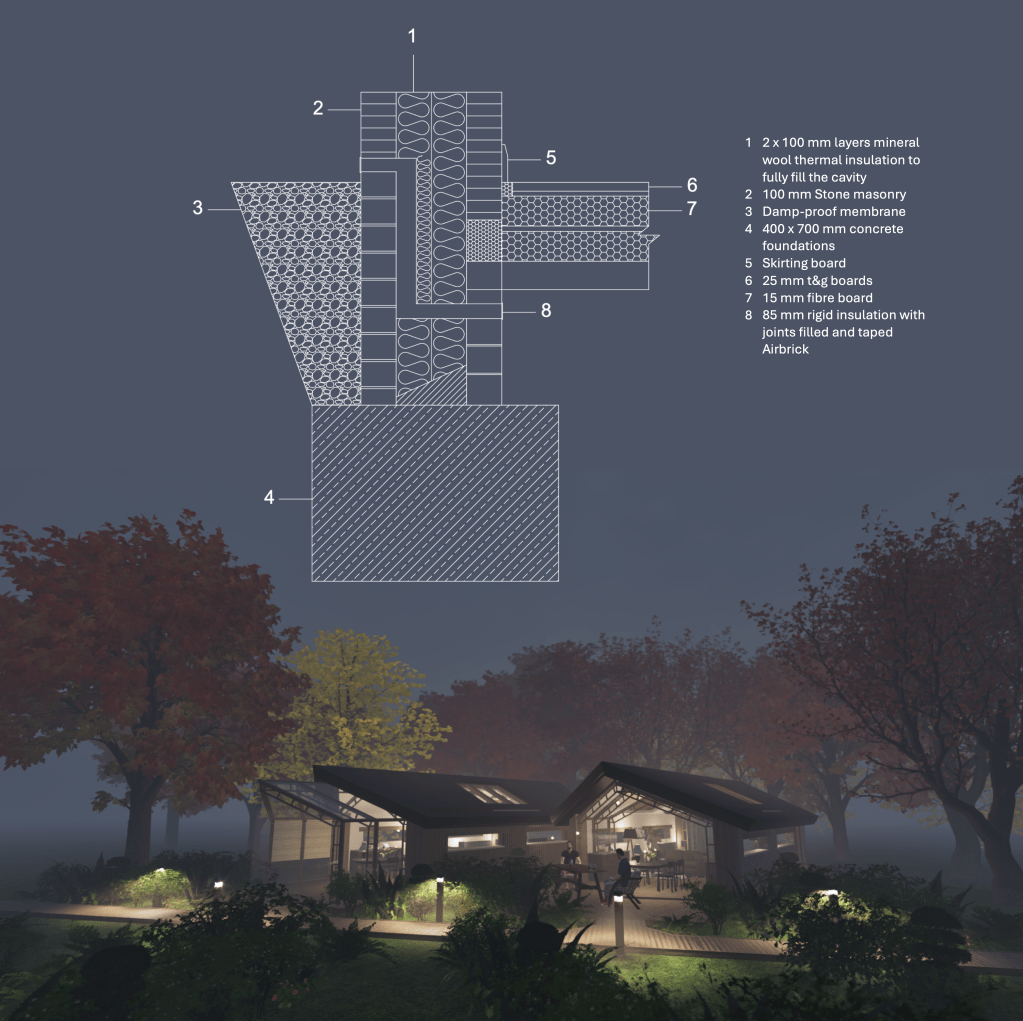
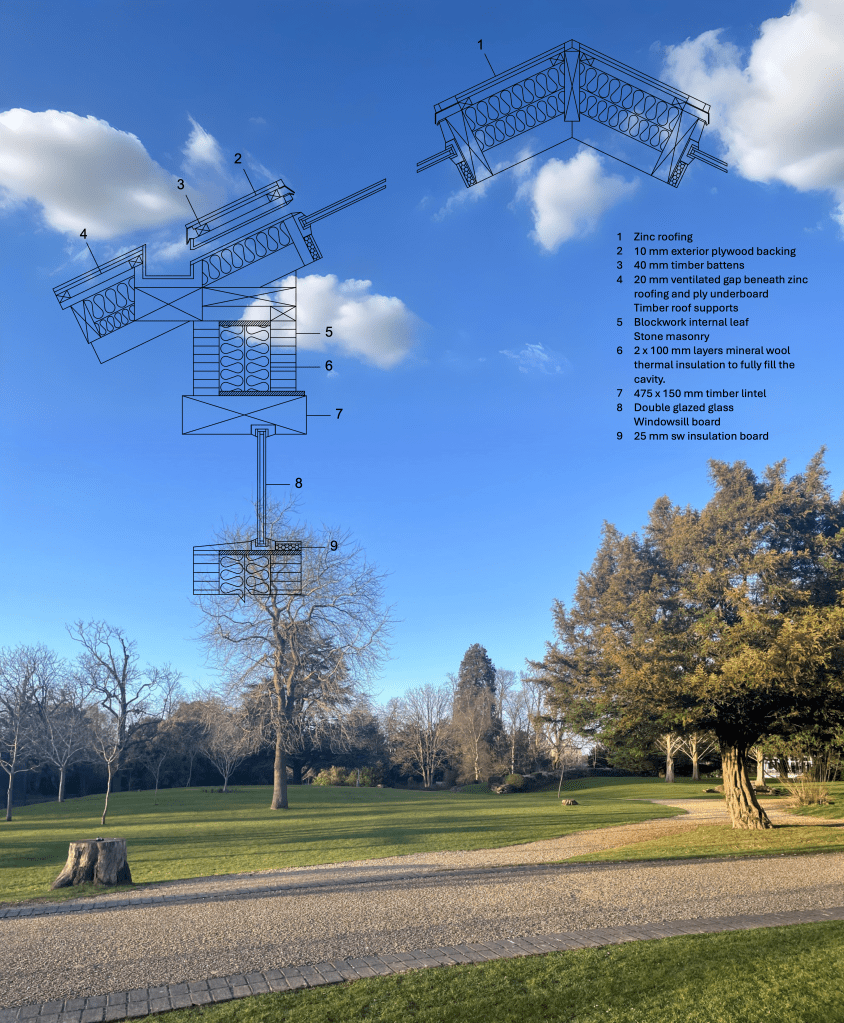
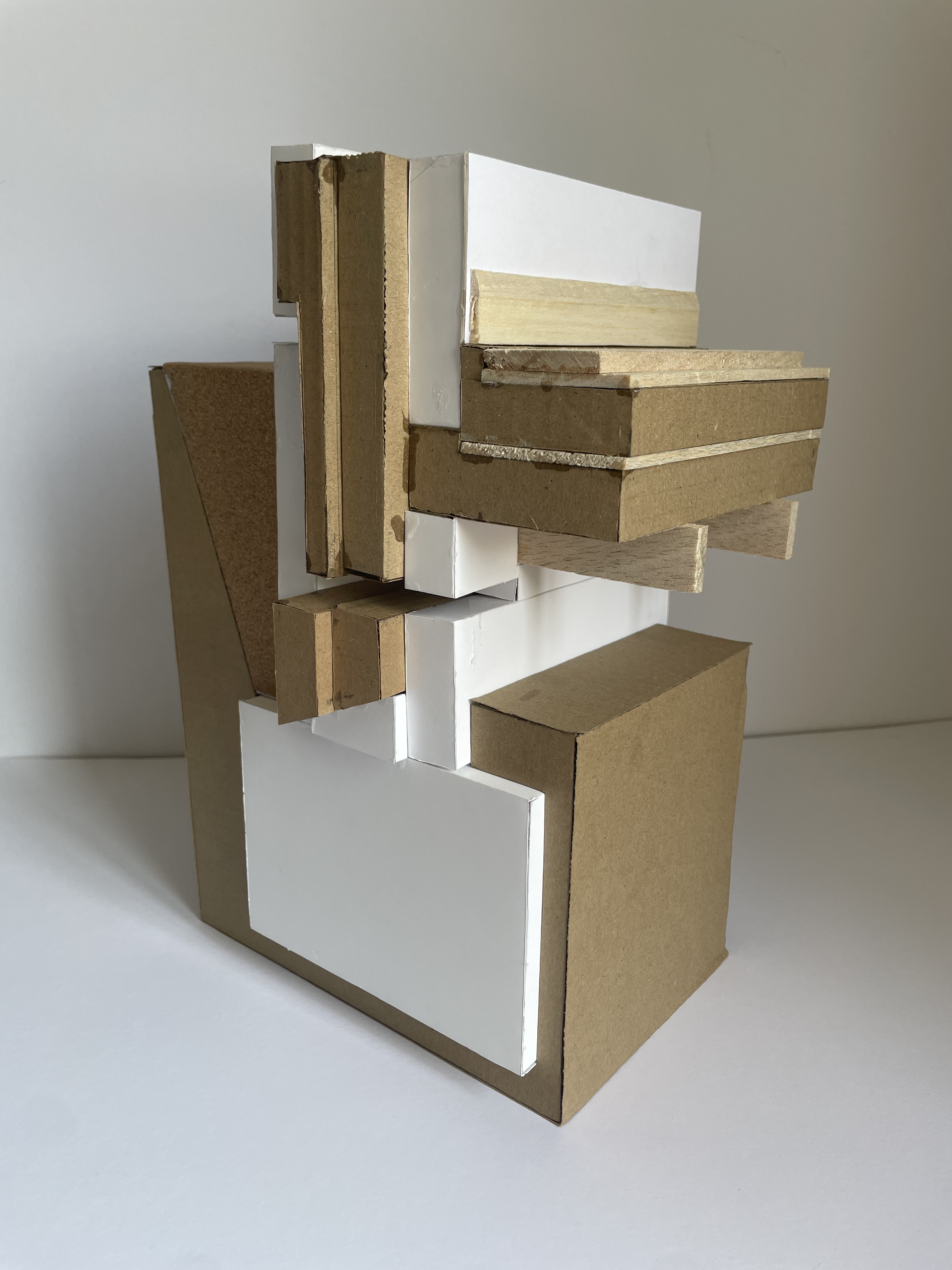
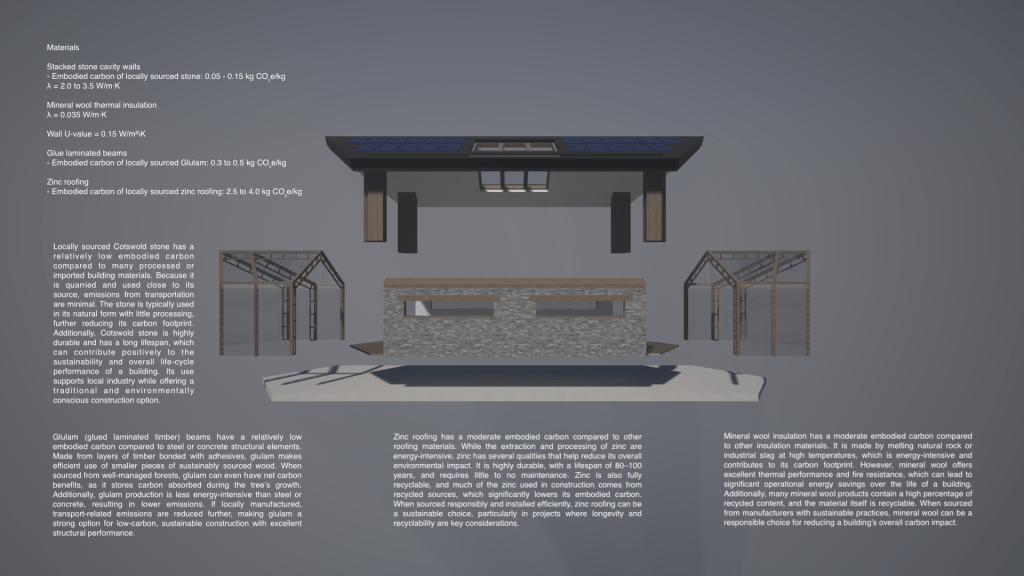
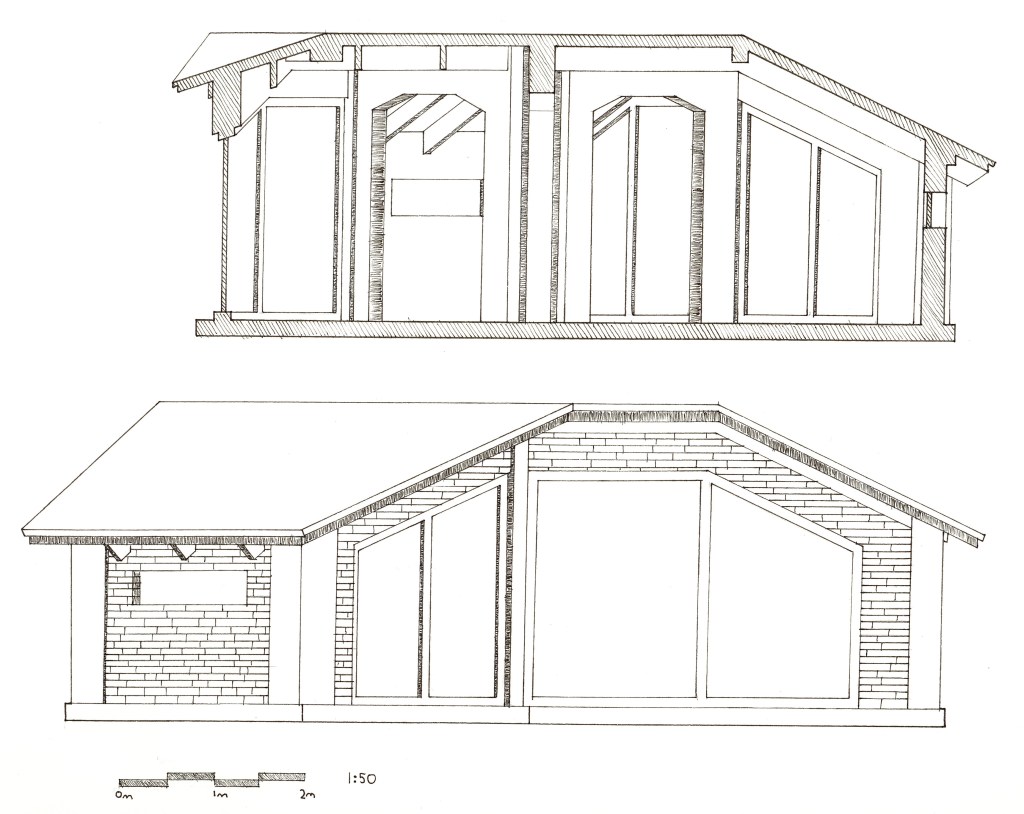
Such choices regarding materiality were made as a result of environmental, thematical and aesthetical reasons. The stone utilised can be locally sourced, decreasing embodied carbon and environmental cost. Additionally, the stone increases the solid, permanent feel of the construction of the home. This is reinforced by the glulam beams which ‘lock’ the stone in place. Such a quantity of glass was used to maximise the natural lighting within the house.
Lighting, Sound & Ventilation
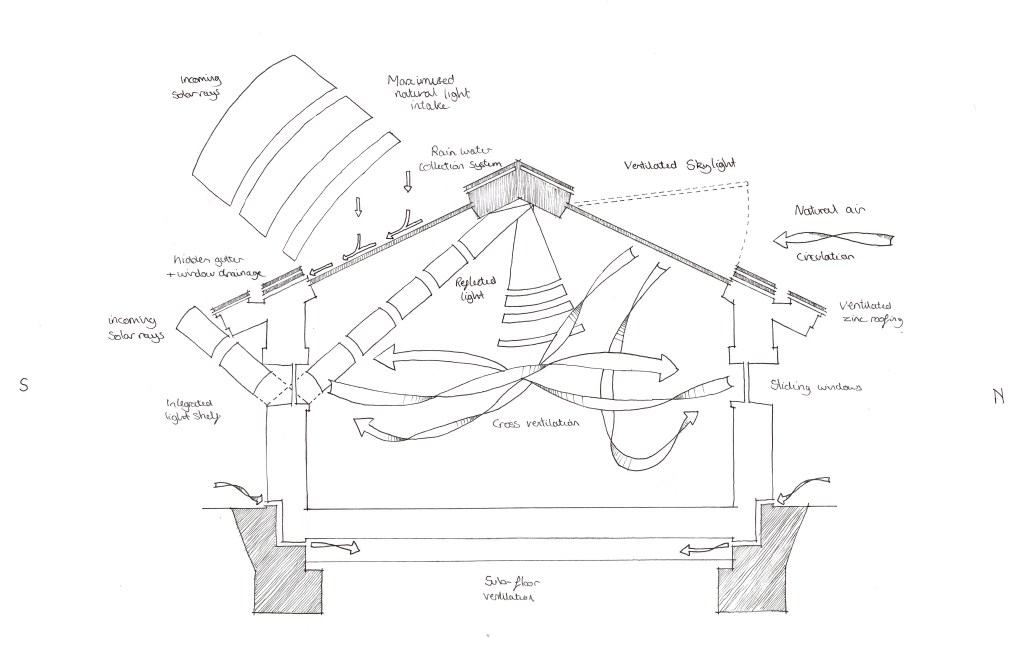
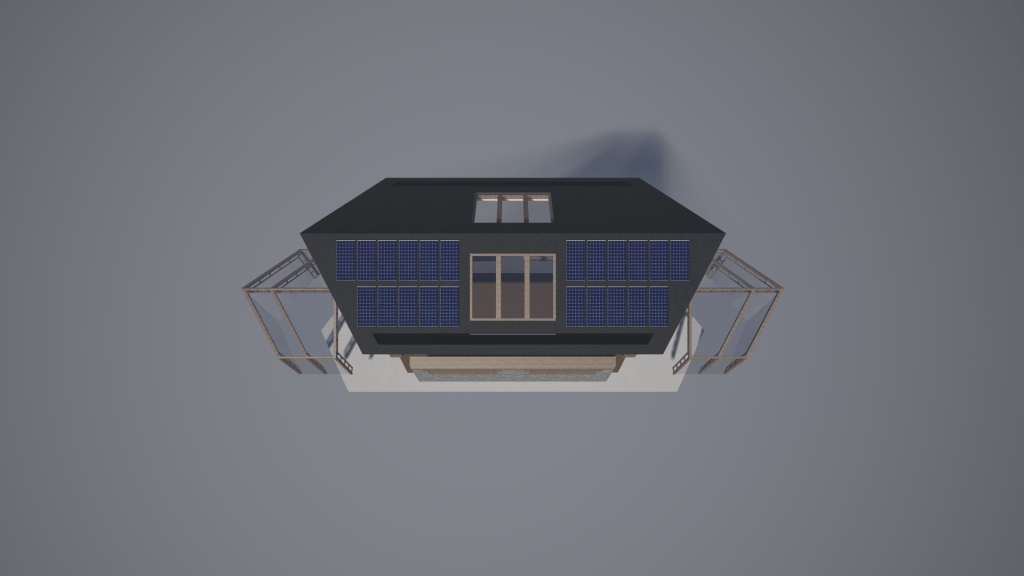
Lighting was a careful consideration when it came to deciding on the construction of the Keystones. The thin, narrow slits for windows on the north and south façades allow for some light to penetrate within the house, whilst the larger eastern and western ends are almost entirely glass facades. To increase control on of the internal temperature, skylights were implemented with the function to open almost fully, venting the structure. The doors on the glass modules can also be opened to increase natural ventilation. For winter heating, ground source heat pumps are utilised to increase sustainability and to reduce costs.
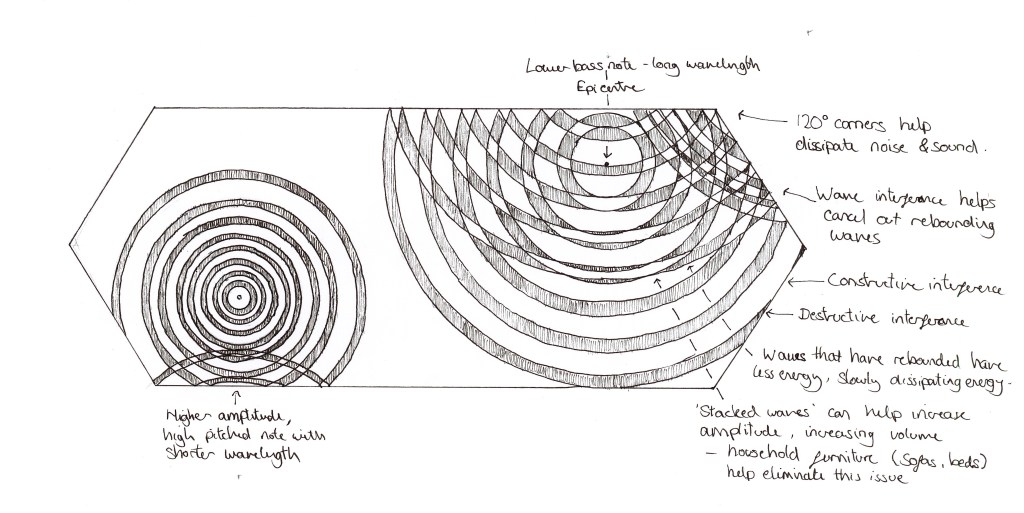
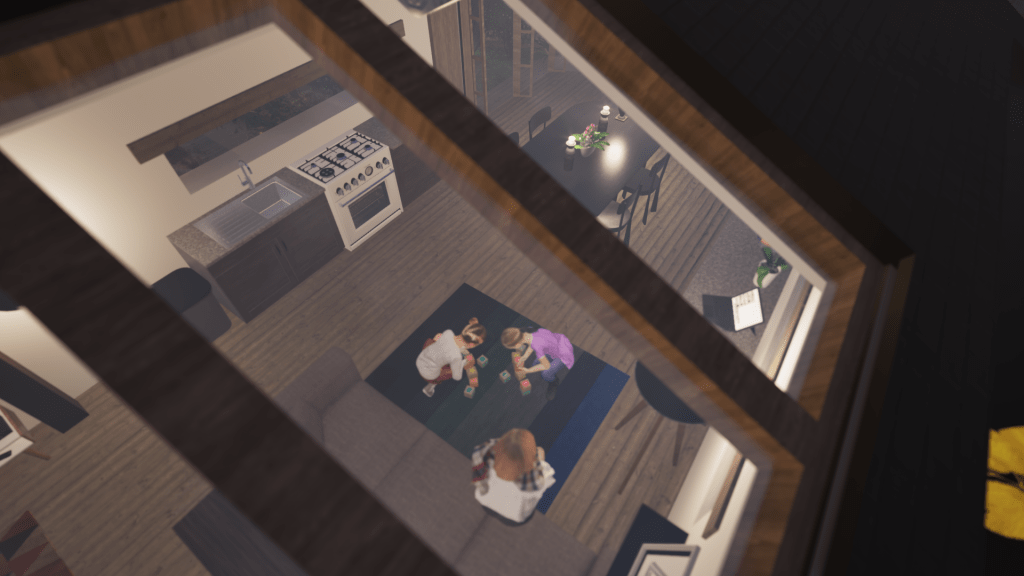
The building’s unorthodox shape helps to eliminate acoustic anomalies, such as echo and feedback. The hexagonal shape of the room redirects the sound away from the source until it fully dissipates. Despite its open-plan design, the space is designed to be fully decorated with household items, include sofas, tables, a bed and a fully stocked kitchen, further helping to decrease and absorb sound anomalies.
Egress paths
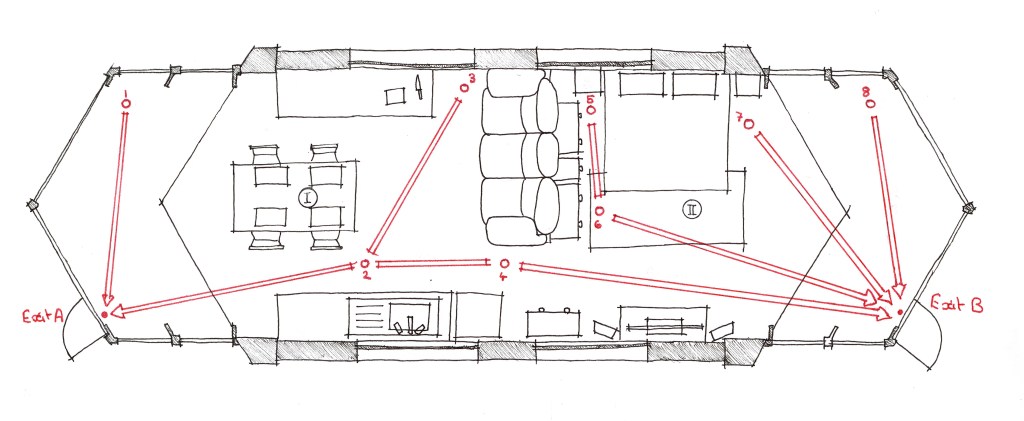
Exit A:
- 1 = 3.75m
- 2 = 4.68m
- 3 = 8.08m
- 4 = 7.03m
Exit B:
- 4 = 6.87m
- 5 = 7.25m
- 6 = 5.60m
- 7 = 4.25m
- 8 = 3.75m
I = Lighting fixture 1
II = Lighting fixture 2
 Architecture: Technology and Construction
Leave a comment