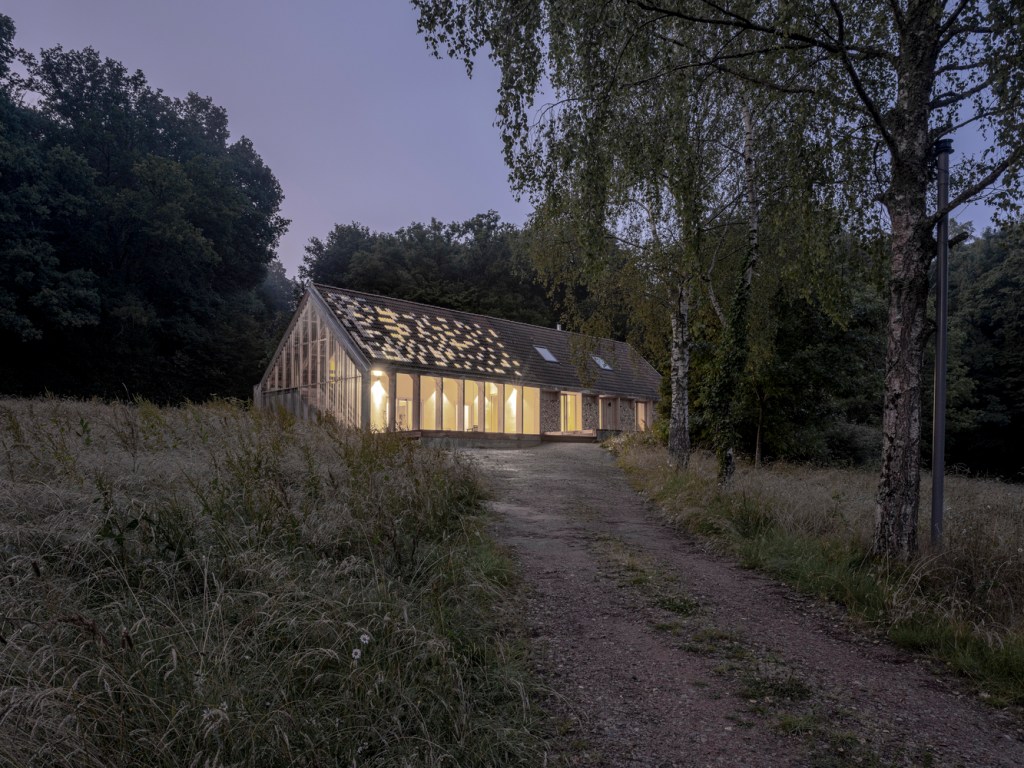
Precedent Study
This study was selected as a precedent as a result of its similarities to my studio project, in its shape and material palette. Where their paths diverge is in the origins of the buildings; the Perche house is a refurbishment of an existing building, whereas the Keystones (studio project) are built from the ground up.
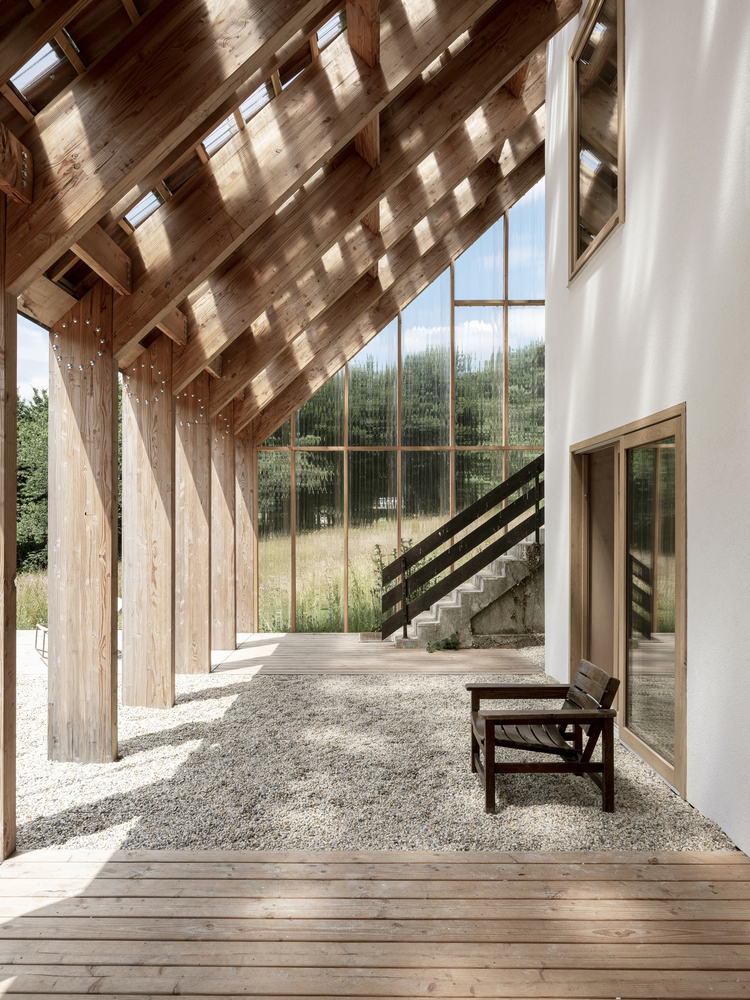
The Perche House
Java Architecture
2022
The Perche House, a holiday home designed by Java Architects in Normandy, is a transformative renovation of a 70’s ‘Phoenix’ home, aptly named in relation to the original constructors. Inherited from the client’s late grandfather, the home was in disrepair and in need of a severe refurbishment.
“The clients contacted us in order to know what would be the best option between a demolition/construction project and a refurbishment of the existing construction. After a journey on this wonderful site, we were convinced that the refurbishment/extension was the best option. Considering that the existing building’s structure was healthy and strong enough to bear an extension we explained to the clients that demolishing the building was not necessary and even harmful from an environmental perspective.” – Java Architecture
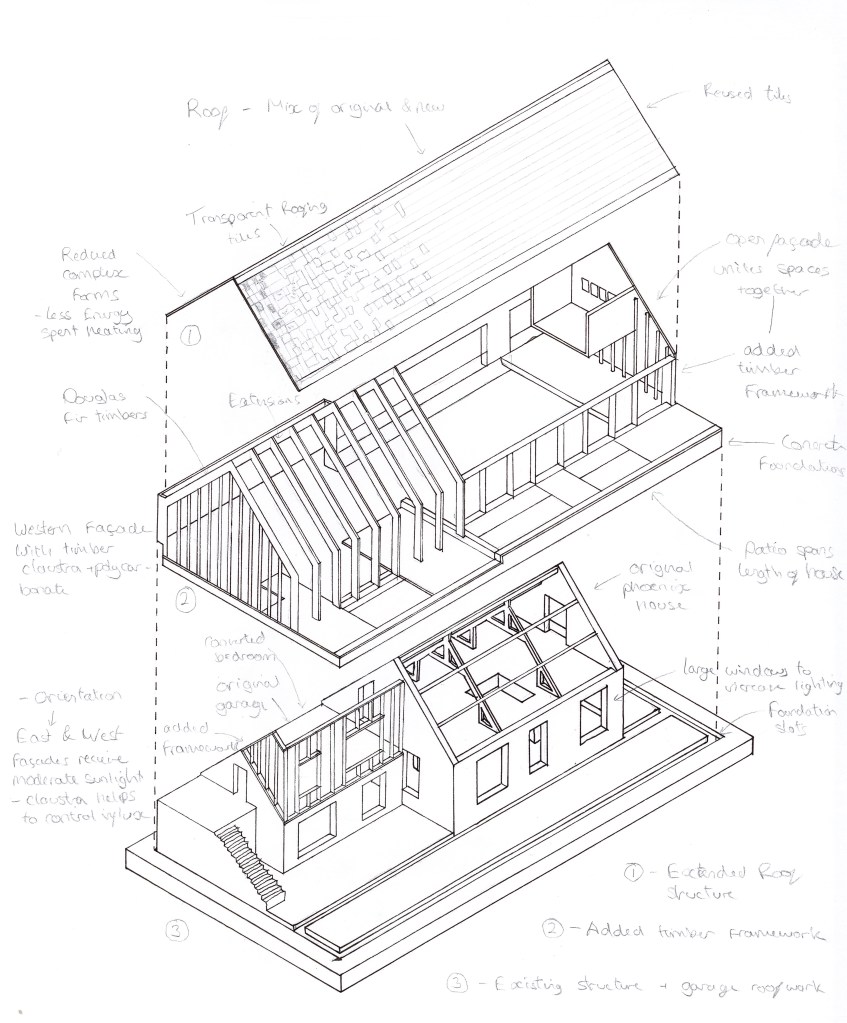
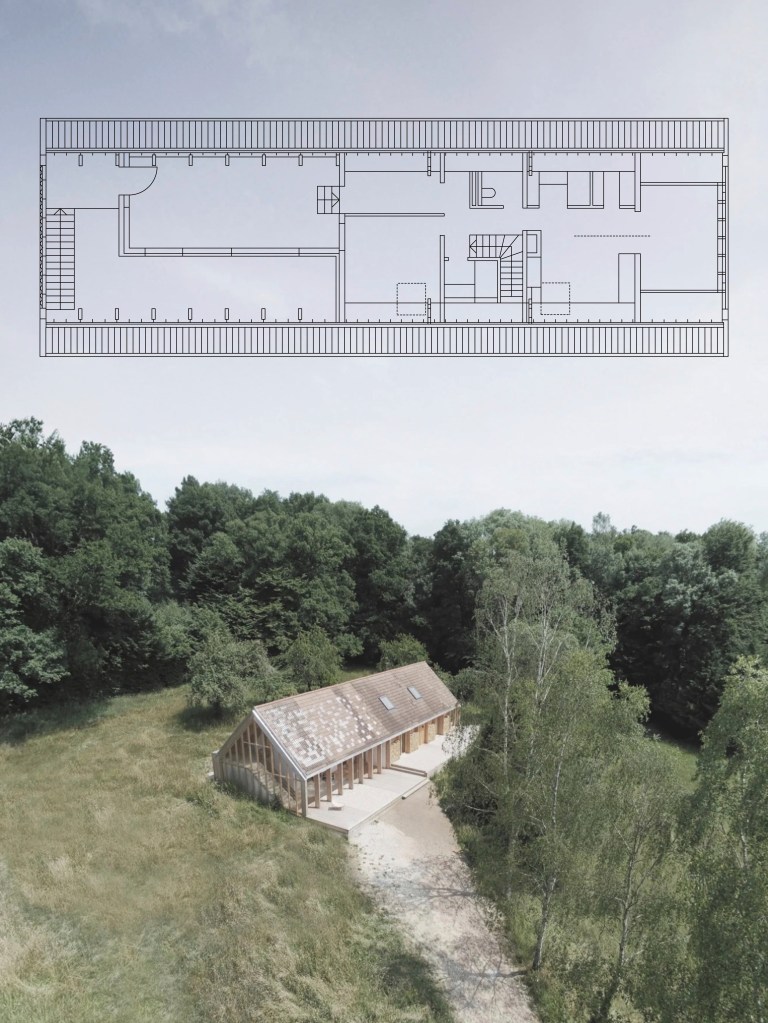
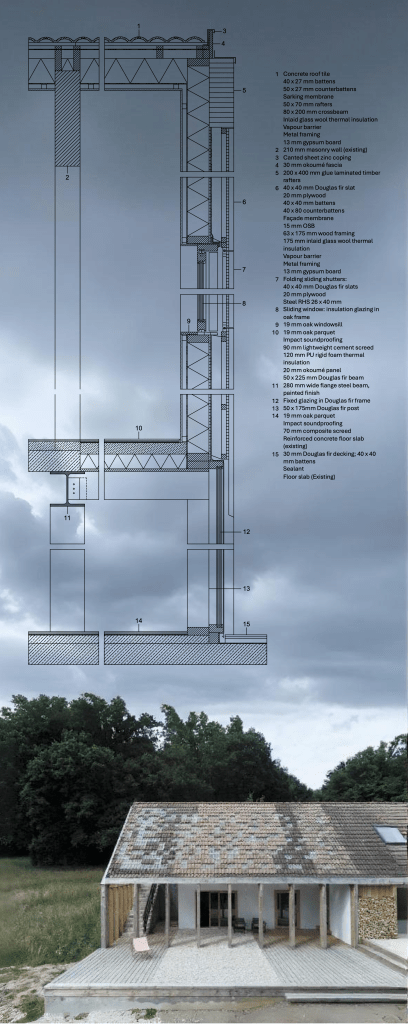
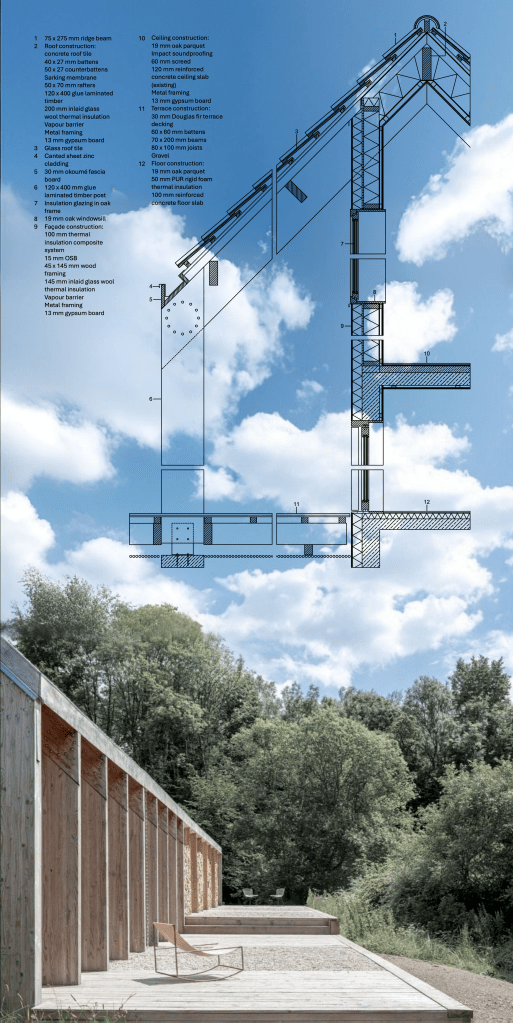
Achieving U-values of 0.165 W/M²K for the façades and 0.163 W/M²K for the roof, this project is closing in on the Passivhaus standard, promising a weathertight envelope will little-to-none thermal loss. Utilising the building’s existing structure has enabled Java to keep the costs down to €346,000, excluding the running costs.
Program
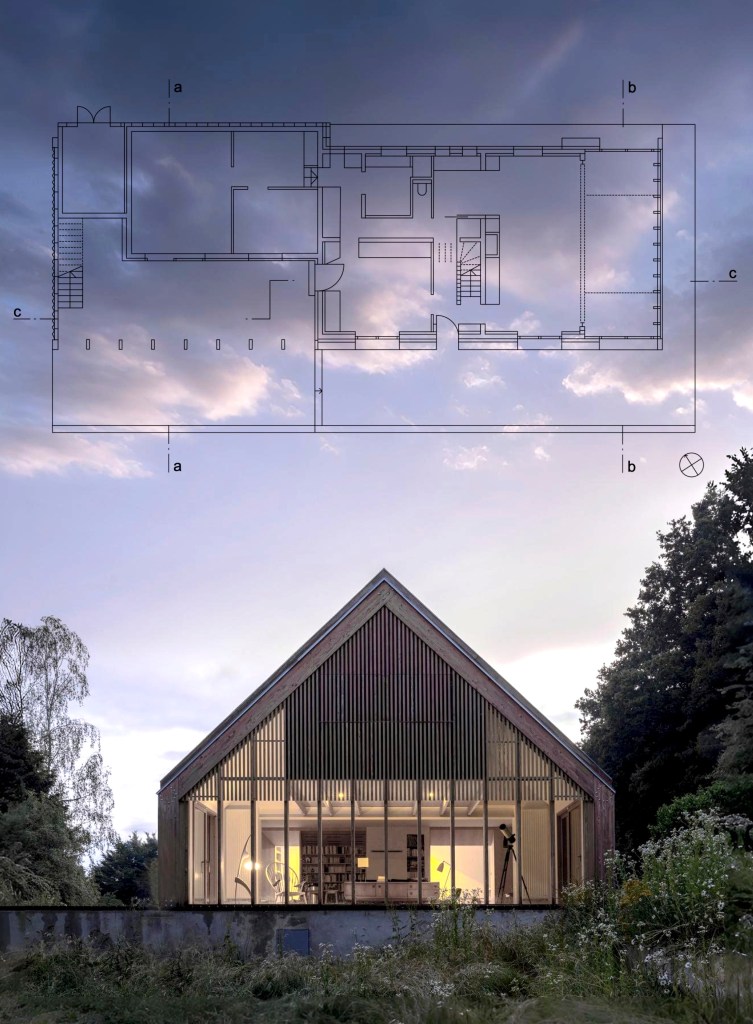
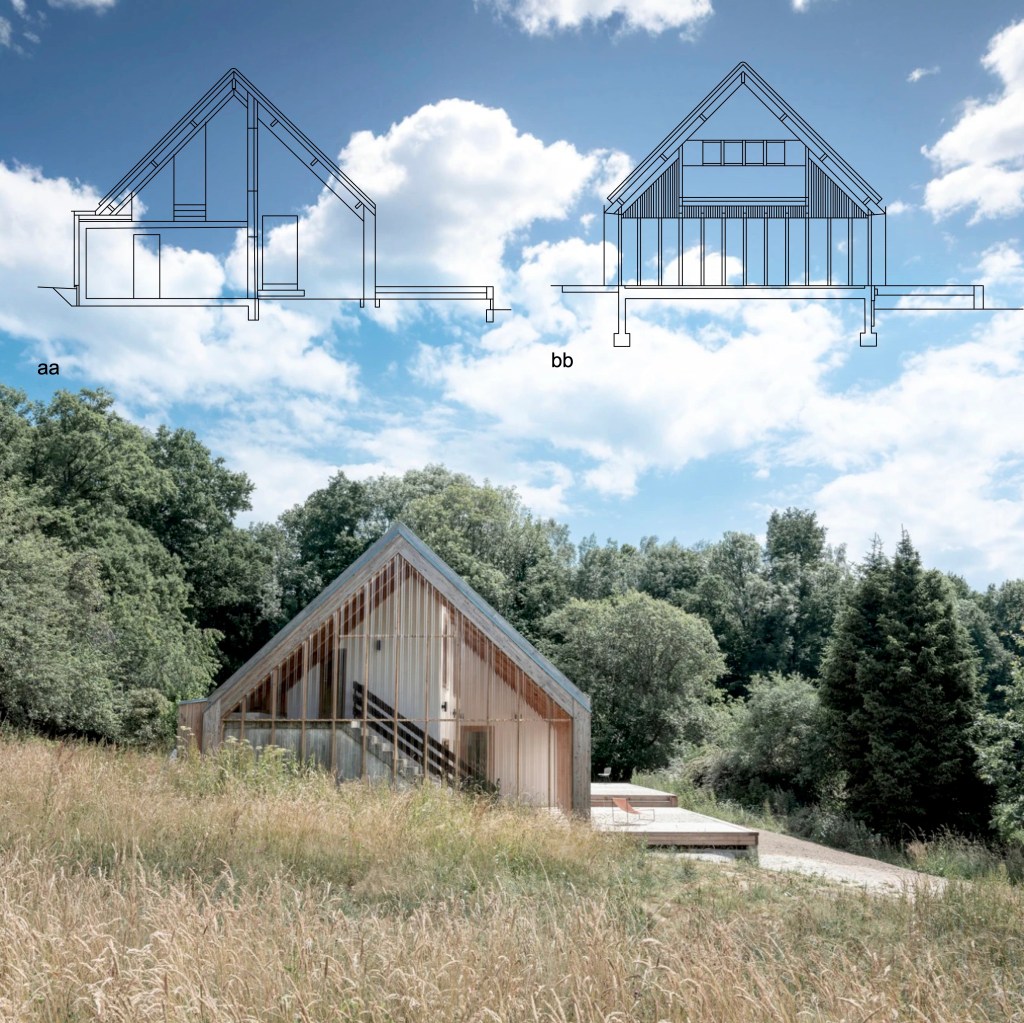
This holiday home’s program is purely residential, with two bedrooms on the ground floor, along with a kitchen and a large living space. The second floor houses two more bedrooms with two bathrooms, and an extra shower.
Façade
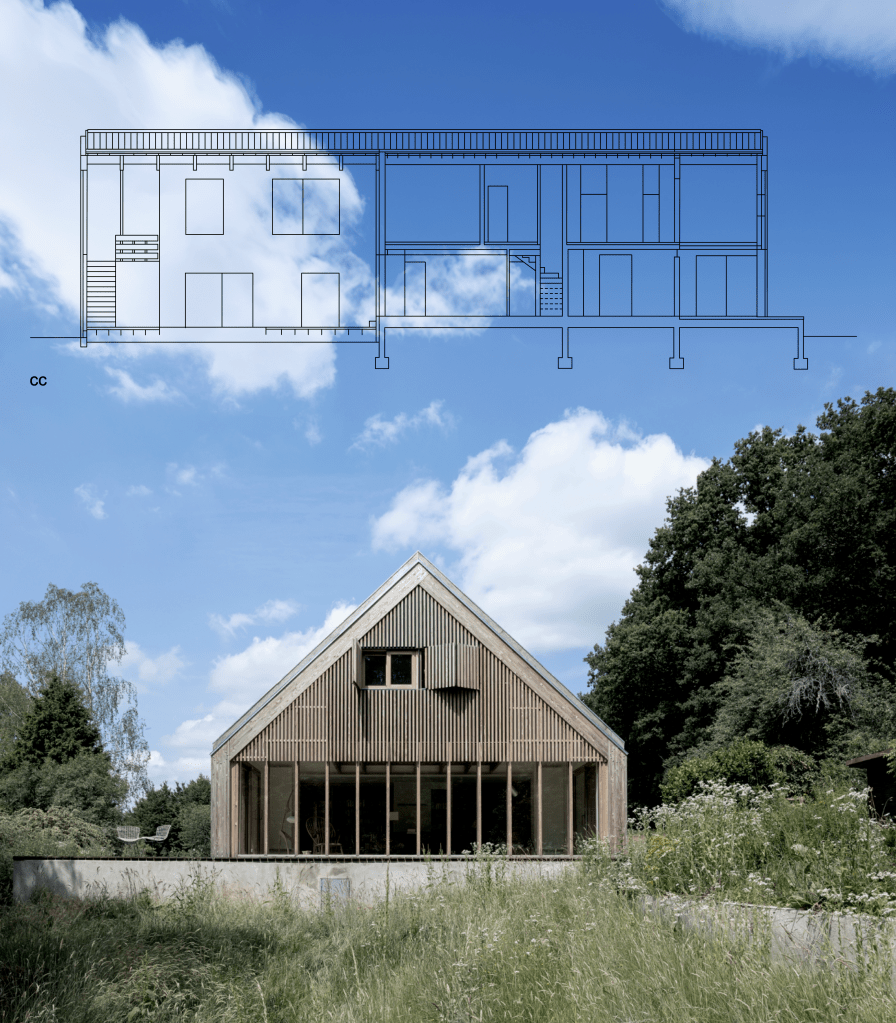
The house’ west façade was removed in order to extend the narrow living space. To do so a wooden structure made of laminated Douglas was built following the existing geometry of the building.
“The extension is wide open on its west facade letting the landscape and natural light enter the living room. In order to create intimacy and prevent overheating in the summer, the upper level of the facade is covered with a wooden claustra.” – Java Architecture
The new facade of the main building was designed to follow the rhythm and thickness of the tension structure. This new skin is made of Douglas “boxes” designed to stock logs creating a living facade changing along the seasons and wood stocks. This continuous wooden facade was linked to the building façades with a common deck, which was created to offer an outdoor space for the summer seasons while letting the rest of the site be as wild as possible.
Sustainability
The building’s low U-values assist in energy demands thanks to its ample insulation, lowering its overall carbon footprint. Additionally, the home is run off of gas, removing its reliance on more carbon-intense resources such as coal and oil.
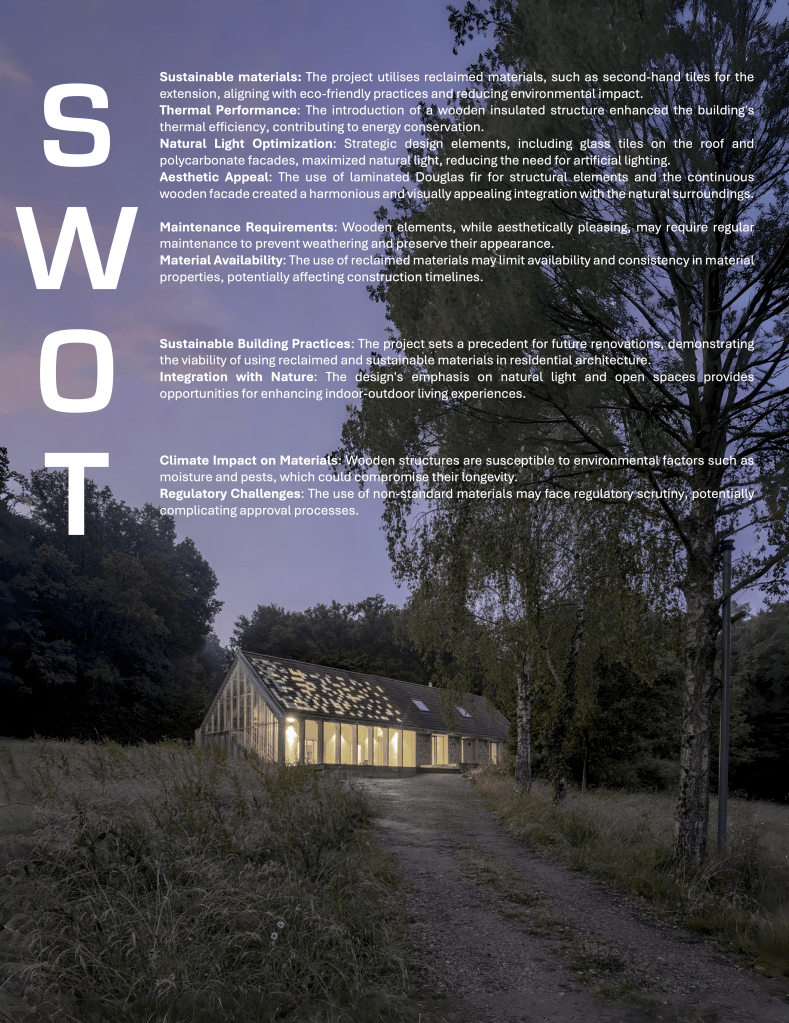
The building’s material selection has also assisted in lowing the carbon footprint; the roof tiles are second hand. The recycled roof tiles come at a cheaper cost, benefit the environment and give the home a ‘lived in’ feel, as though it had been there for some time.
To help reduce reliance on artificial lighting strategies, the entire west façade of the house is wide open, letting the landscape and natural light enter the living room. In order create the feel of intimacy and prevent overheating, the façade is covered with a wooden claustra.
The decision was made to keep the rest of the site as wild as possible, promoting a diverse ecosystem and nurturing the surrounding biome.
Bibliography
- Dethier, C. (2022) ‘Once Upon a Time in the Perche House’, Java Architecture. Available at: https://archello.com/story/135396/attachments/photos-videos/3 (Accessed: 17 April 2025).
- “Once Upon a Time in the Perche House / Java Architecture” 21 Jan 2024. ArchDaily. Accessed 17 Apr 2025. <https://www.archdaily.com/994759/once-upon-a-time-in-the-perche-house-java-architecture> ISSN 0719-8884
*CAD Drawings by Matt Carré
 Architecture: Technology and Construction
Leave a comment